Illinois State Budget Research Dataset
My role: Creator & lead data developer
Context: Independent research data project · Illinois
Methods & tools: R · Administrative data · Classification · Quality control
Bringing the records together
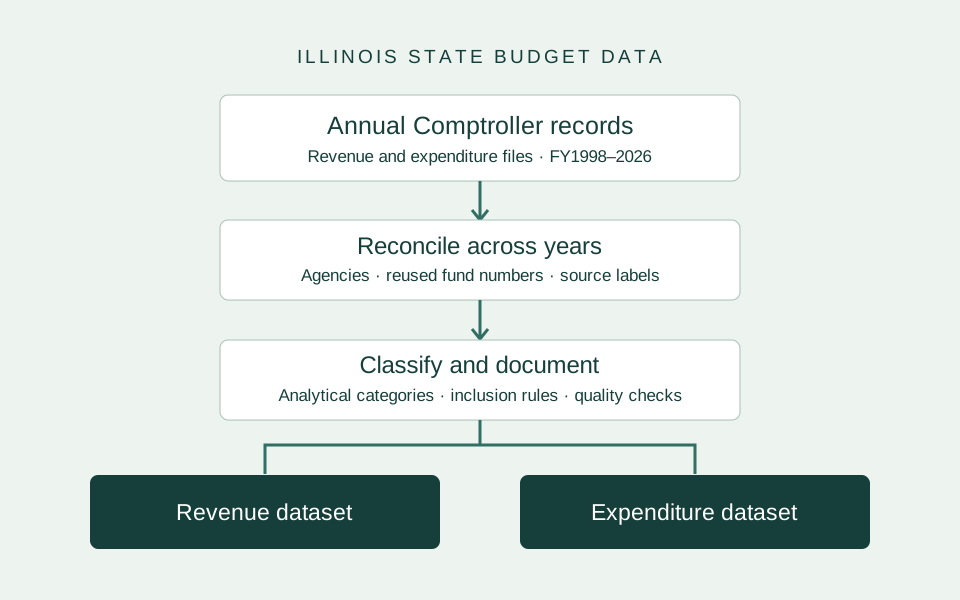
Illinois publishes fiscal information across annual reports, budget books, spreadsheets, and searchable portals. The Comptroller’s appropriation tool supports fiscal-year and agency-level queries; GOMB’s budget books and data files are organized by budget year. These resources serve different purposes, and using them for longitudinal research still requires assembling and reconciling records across years.
I built this project to put that work in one place: consolidated revenue and expenditure datasets spanning FY1998–2026, with expenditures at the agency–object–appropriation level and revenues at the revenue-source level, retaining fund and agency identifiers. Researchers can work across years without starting over with individual annual files or rebuilding the same labels and classifications.
More detail for independent research
The dataset extends the detail available in Fiscal Futures totals and summary tables. It retains observations beyond those selected for that reporting program and brings together fund types, appropriation labels, object labels, and analytical categories across years.
I developed classifications to make comparisons with GOMB and COGFA reporting easier, and added an item_detail field describing pension, healthcare, and other items that may be useful for a particular research question. Those categories are research tools: they help users select, compare, and aggregate records while preserving the detail needed to investigate individual items.
What is in the datasets?
These are selected fields in the September 16, 2026 exports. The repository contains the data and construction notes.
| Detail | Expenditure fields | Revenue fields |
|---|---|---|
| Fiscal year | fy |
fy |
| Fund identifiers and labels | fund, fund_re, fund_name_ab |
fund, fund_re, fund_name_ab |
| Fund type | fund_category, fund_cat_name |
fund_category, fund_cat_name |
| Agency | agency, agency_name |
agency |
| Appropriation organization and labels | appr_org, org_name, wh_approp_name, approp_number |
— |
| Object and appropriation components | object, obj_of_exp, obj_seq_type, sequence, type |
— |
| Revenue source and labels | — | source, source_name, source_name_AWM |
| Analytical classifications | group, group_name, item_detail, pension |
rev_type, rev_type_name, rev_type_name_COMPTROLLER |
| Amount | expenditure |
receipts |
The exact labels and classifications are documented alongside the code. For example, wh_approp_name supplies appropriation wording, while group_name and item_detail provide additional analytical groupings and descriptions.
An example: spending by fund type
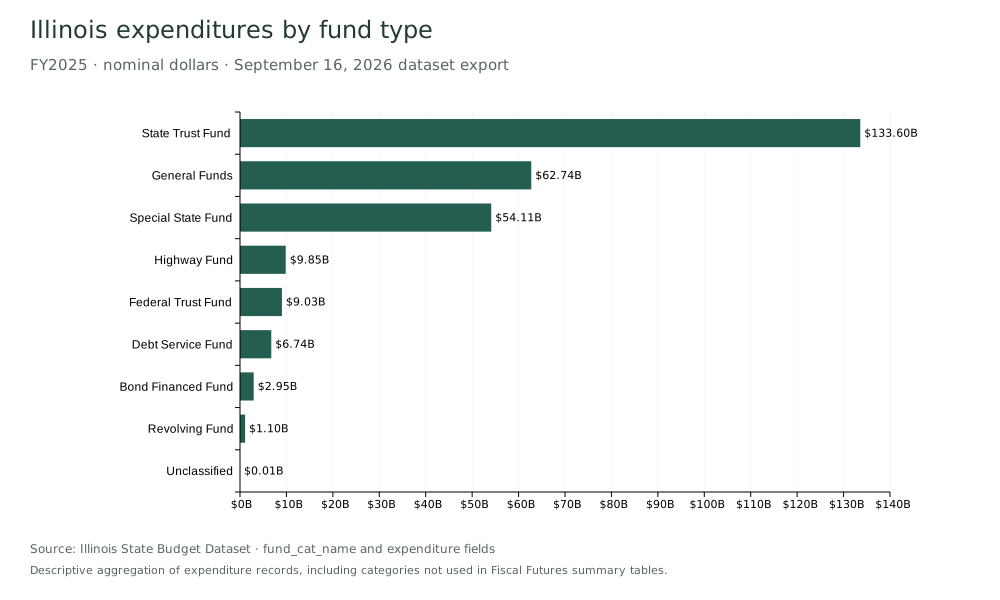
This example groups FY2025 expenditure records by fund_cat_name. It illustrates the detail available for independent analysis rather than an annual Fiscal Futures summary table. Amounts are nominal dollars; fund labels differing only in capitalization are combined.
Download the chart data (CSV).
- Which expenditure objects or appropriation lines account for the largest amounts?
- How has spending from different fund types changed over time?
- How do analytical groups compare with GOMB or COGFA categories?
- Which pension or healthcare items are identifiable through
item_detail?
Reproduce a grouping in R
library(dplyr)
library(readr)

expenditures <- read_csv("budget_data_exp_2026-09-16.csv")

# Annual spending by the dataset's analytical group.
by_group <- expenditures |>
  group_by(fy, group_name) |>
  summarise(expenditure = sum(expenditure, na.rm = TRUE), .groups = "drop")

# Use fund_cat_name instead of group_name for a fund-type comparison,
# or inspect item_detail to focus on a particular pension/healthcare item.
Research outputs
The repository provides the expenditure and revenue datasets, data-construction code, classifications, and annual-update guidance. The companion Fiscal Futures project explains the methodology used for that reporting program.